Why Pressure-Proof

Built for cue sports competitors who know their biggest advantage comes from a trained, reliable mind.
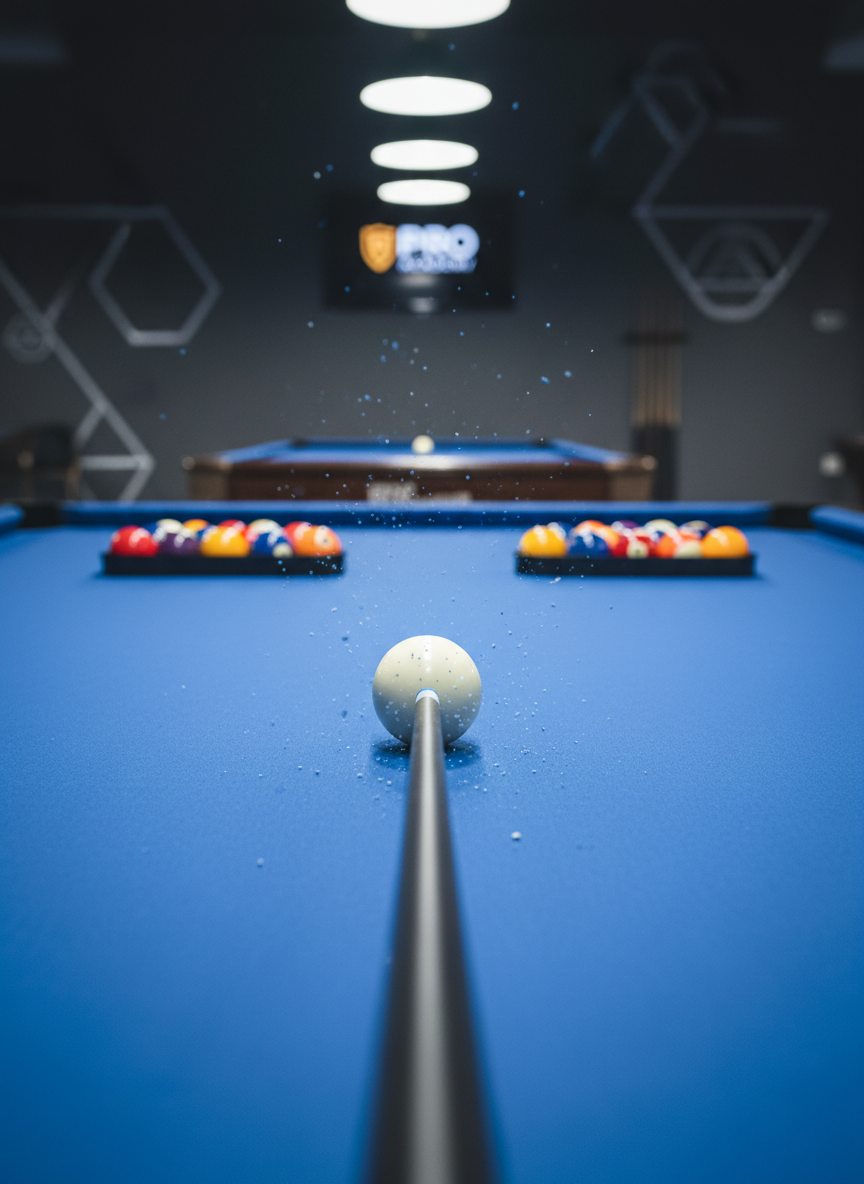
A close-up, photographic view of a sleek, matte-black pool cue resting precisely behind a white cue ball on a competition pool table, rich blue cloth stretched taut and flawless. Tiny specks of chalk dust hover in the air, frozen mid-flight, suggesting a recent practice stroke. In the background, slightly out of focus, tight racks of colorful, polished pool balls sit on neighboring tables under tournament-style pendant lighting. The environment is a high-end training facility with dark walls and subtle branding on the rail, evoking a professional academy. Cool, directional overhead lights create crisp reflections along the cue shaft and cue ball, emphasizing precision. Shot from a very low angle along the line of aim, with shallow depth of field to highlight the exact contact point, the mood is intensely focused, analytical and serious, ideal for illustrating mental performance training.
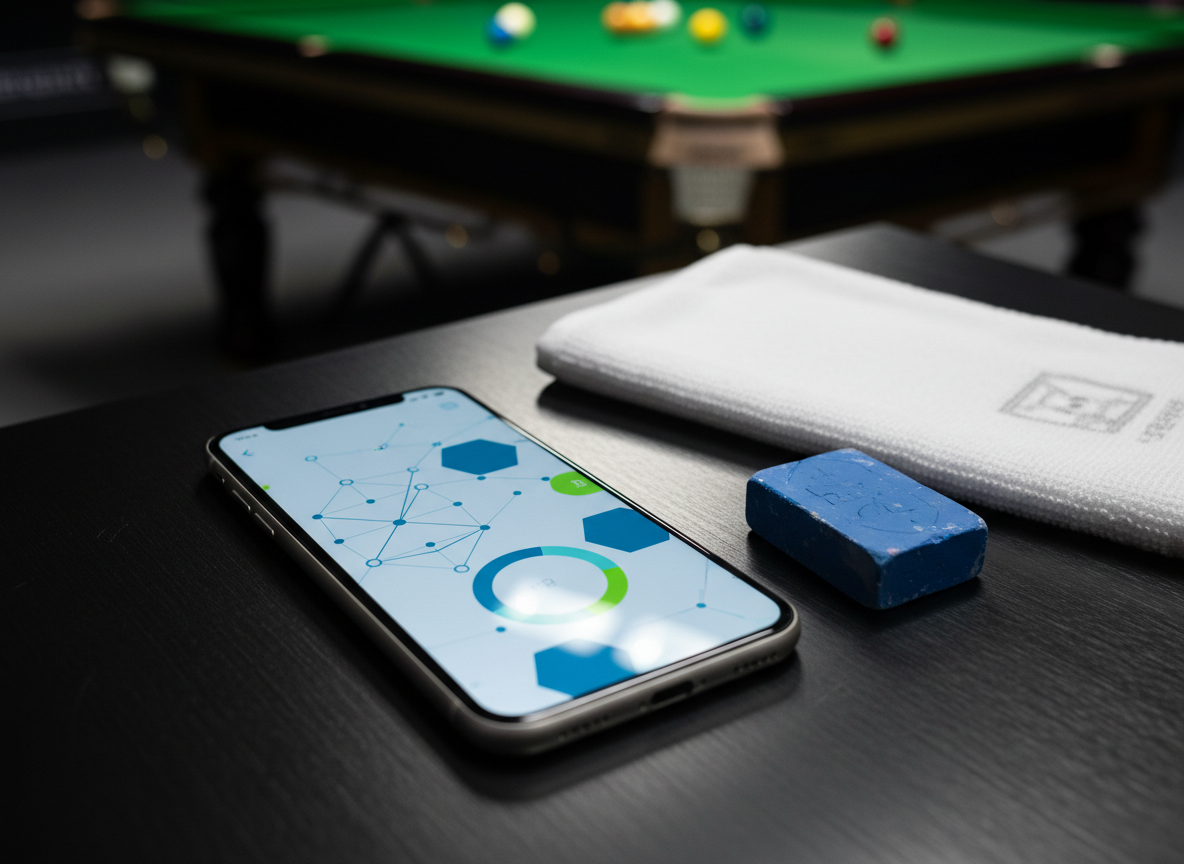
A photographic, high-resolution close-up of a modern smartphone lying on a brushed black metal surface beside a neatly folded cue towel and a cube of worn blue chalk. On the screen, a sleek cue sports mental training app interface is visible as abstract shapes, graphs and progress bars in cool blues and greens, avoiding any readable text. In the blurred background, the edge of a competition snooker table and a few scattered balls under spotlight hint at an arena setting. Soft, controlled studio lighting from the top-left creates gentle reflections on the phone’s glass and subtle texture on the metal surface. Shot from a slightly elevated three-quarter angle with shallow depth of field, the mood is purposeful and professional, clearly promoting app download, structured training plans and subscription-based performance tracking for serious cue sports competitors.

Built For Serious Cue Players

Pressure Proof Cue Sports was created by coaches and players who saw mental skills overlooked. Our mission is structured, sport-specific psychology training that helps you trust your game when it matters most.

Our Coaches
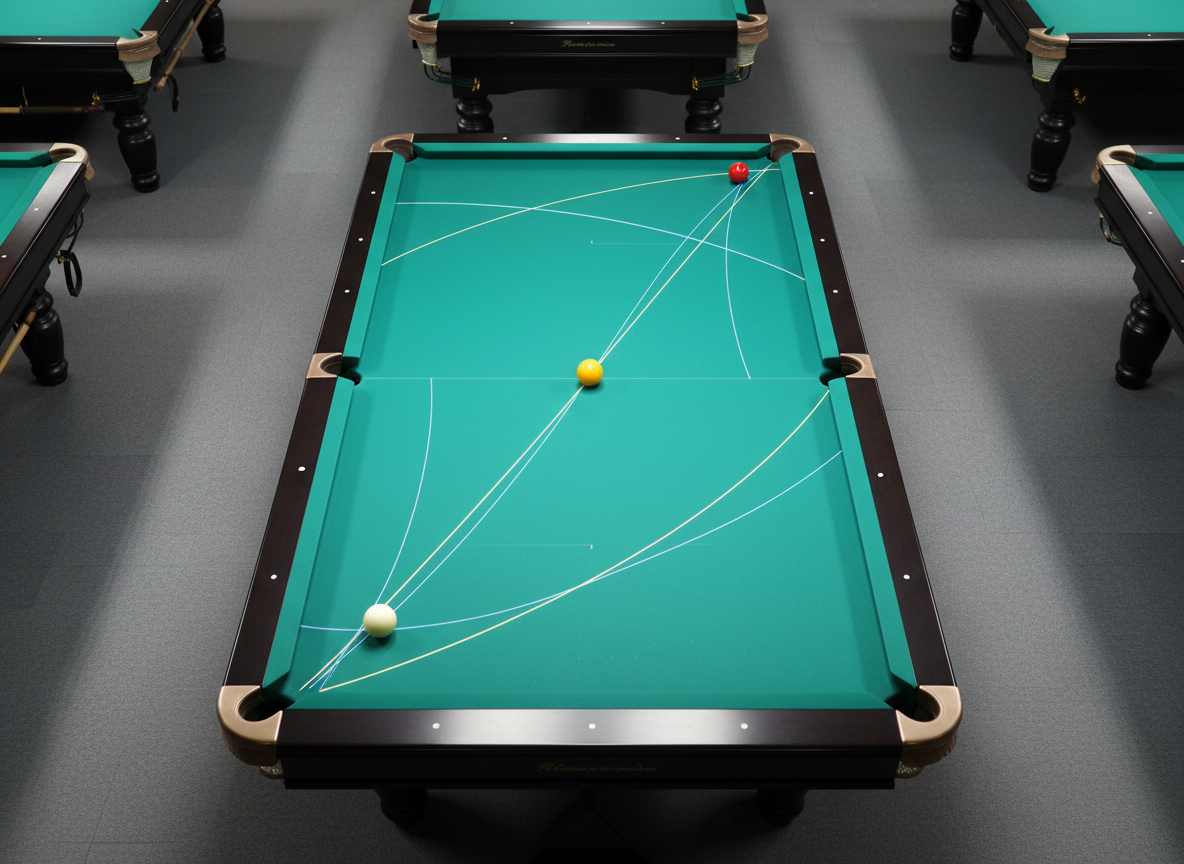
A dramatic, overhead photographic shot of a full-size billiards table captured mid-competition, the green cloth crisscrossed by complex shot lines visualized as faint, glowing trajectories arcing between carom balls. Three pristine, glossy billiard balls—white, yellow and red—are spaced strategically across the table, each casting soft, accurate shadows under bright, neutral arena lighting. The setting is a quiet, elite billiards hall with surrounding tables disappearing into gentle blur, their rails and pockets only hinted at. The lighting is even and shadow-controlled, emphasizing clarity and calculation rather than spectacle. Composition follows a clean, geometric aesthetic, with the balls and subtle trajectory lines arranged on a strong rule-of-thirds grid. The mood is cerebral, disciplined and competitive, suggesting deep focus, visualization and tactical thinking central to mental training for carom players.

Aarav Sharma

CEO

Lead sport psychologist, specialising in cue sports pressure training, designs each mental skills module.
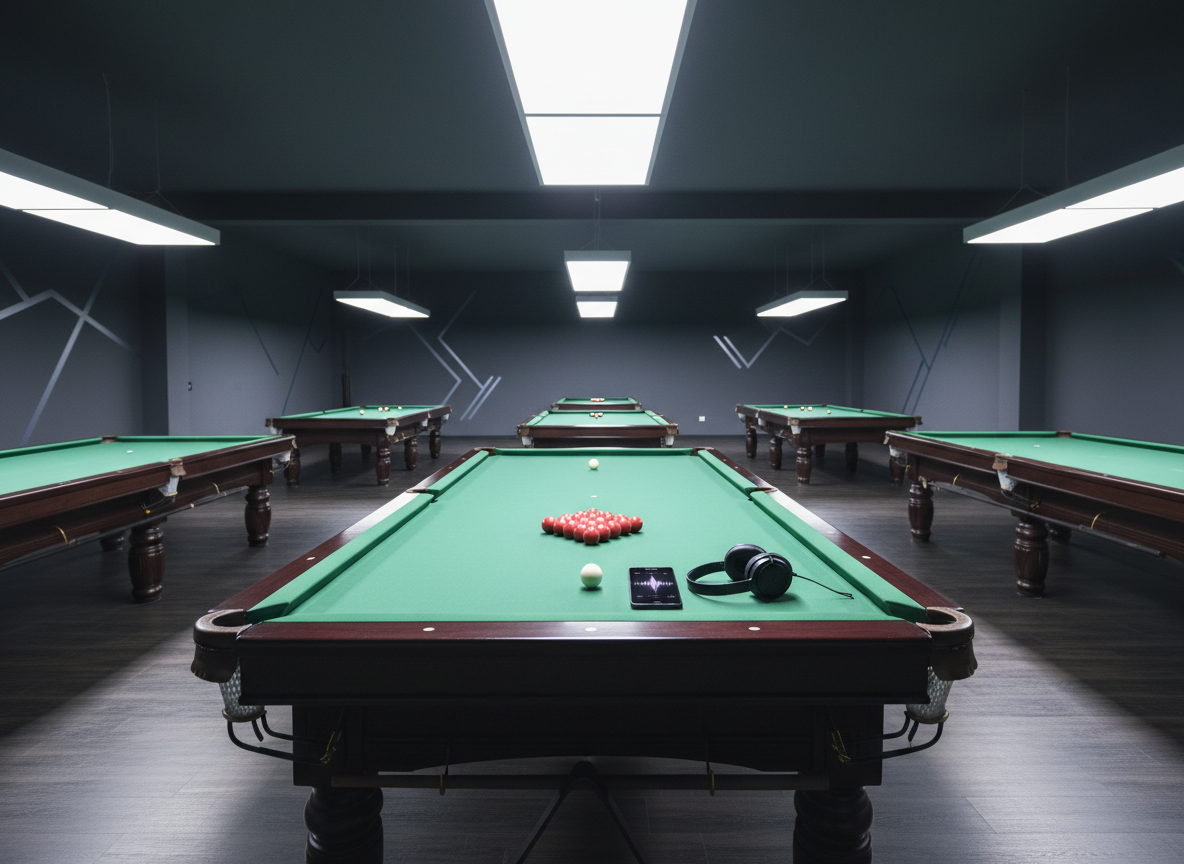
A wide, photographic shot of a row of professional pool and snooker tables in a dedicated high-performance training center, all perfectly aligned under bright, even tournament lighting. On the nearest table, balls are carefully arranged in patterns that suggest focused drills rather than casual play, while a smartphone and headphones rest neatly on the rail, hinting at audio-guided mental routines. The floor is dark, matte wood, walls painted in deep charcoal with subtle abstract graphics evoking concentration and precision. The composition uses a strong central perspective, with receding tables creating depth and drawing the viewer’s eye into the space. The mood is serious, disciplined and aspirational, evoking a place where committed cue sports players come to build confidence, consistency and performance under pressure with structured, app-based training.

Mateo García

CTO

Former pro snooker player translating tour experience into practical routines players can use daily.
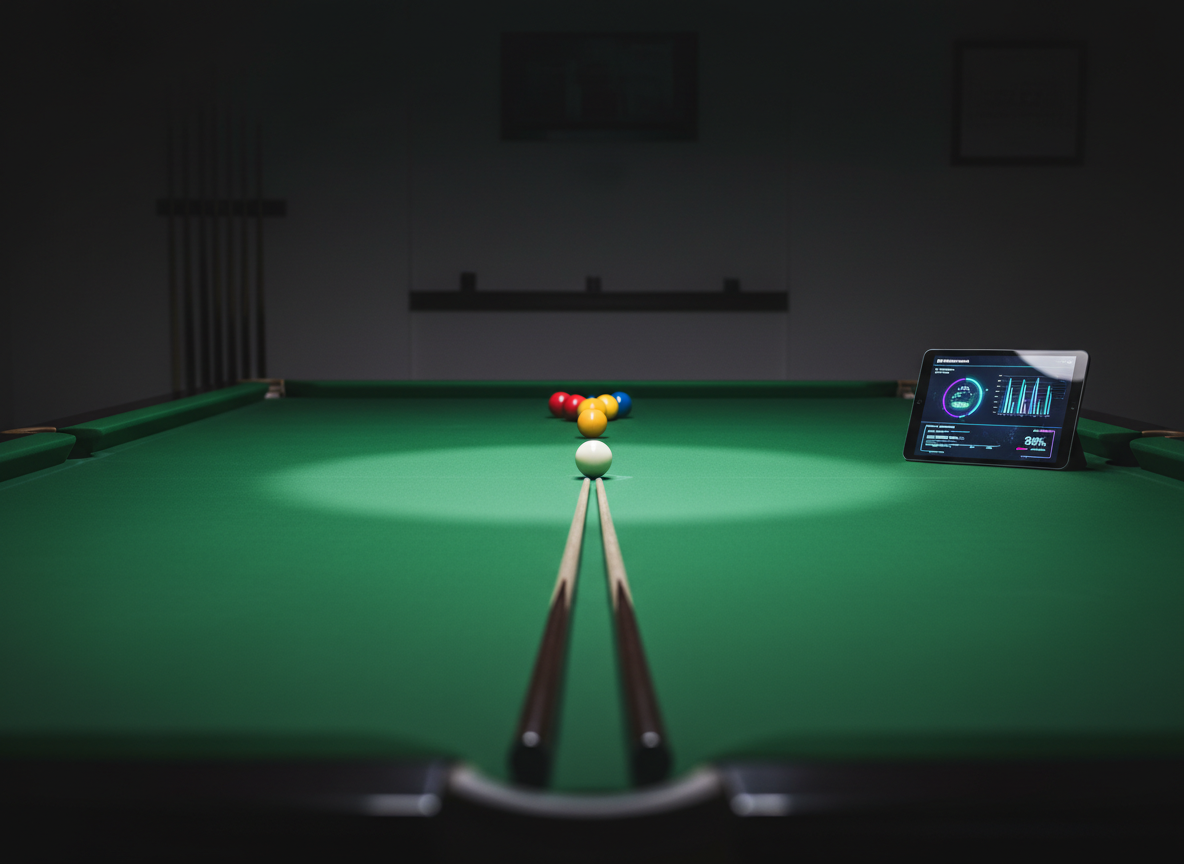
A cinematic, photographic side-on view of a cue resting in a rigid, laser-straight line behind the cue ball on a professional snooker table, with a digital tablet propped on the rail nearby displaying abstract performance metrics in cool neon accents. The table’s green baize is immaculate, and a few colored balls sit at precise intervals down the line of aim, representing target-focused drills. The surrounding environment is a dim, modern training room, walls barely visible, putting all attention on the table and device. A single, bright overhead light forms a spotlight over the cue ball and tablet, creating high contrast, crisp shadows and a sense of intensity. Composed using leading lines pulling the eye from cue to device, the mood is disciplined, high-tech and competitive, perfect for showcasing structured mental routines and premium subscription coaching.

Zuri Ndlovu

Engineer

Neuroscience researcher focused on focus, confidence, and decision-making under competitive cue sports pressure.

A close-up, photographic view of a sleek, matte-black pool cue resting precisely behind a white cue ball on a competition pool table, rich blue cloth stretched taut and flawless. Tiny specks of chalk dust hover in the air, frozen mid-flight, suggesting a recent practice stroke. In the background, slightly out of focus, tight racks of colorful, polished pool balls sit on neighboring tables under tournament-style pendant lighting. The environment is a high-end training facility with dark walls and subtle branding on the rail, evoking a professional academy. Cool, directional overhead lights create crisp reflections along the cue shaft and cue ball, emphasizing precision. Shot from a very low angle along the line of aim, with shallow depth of field to highlight the exact contact point, the mood is intensely focused, analytical and serious, ideal for illustrating mental performance training.

Leila Haddad

Designer

Performance data analyst tracking progress so every session converts into measurable, match-ready mental gains.

Reviews

A photographic, high-resolution close-up of a modern smartphone lying on a brushed black metal surface beside a neatly folded cue towel and a cube of worn blue chalk. On the screen, a sleek cue sports mental training app interface is visible as abstract shapes, graphs and progress bars in cool blues and greens, avoiding any readable text. In the blurred background, the edge of a competition snooker table and a few scattered balls under spotlight hint at an arena setting. Soft, controlled studio lighting from the top-left creates gentle reflections on the phone’s glass and subtle texture on the metal surface. Shot from a slightly elevated three-quarter angle with shallow depth of field, the mood is purposeful and professional, clearly promoting app download, structured training plans and subscription-based performance tracking for serious cue sports competitors.

Aya Nakamura

I used to fall apart on TV tables; now my pre-shot routine and breathing keep me composed through every frame.

A dramatic, overhead photographic shot of a full-size billiards table captured mid-competition, the green cloth crisscrossed by complex shot lines visualized as faint, glowing trajectories arcing between carom balls. Three pristine, glossy billiard balls—white, yellow and red—are spaced strategically across the table, each casting soft, accurate shadows under bright, neutral arena lighting. The setting is a quiet, elite billiards hall with surrounding tables disappearing into gentle blur, their rails and pockets only hinted at. The lighting is even and shadow-controlled, emphasizing clarity and calculation rather than spectacle. Composition follows a clean, geometric aesthetic, with the balls and subtle trajectory lines arranged on a strong rule-of-thirds grid. The mood is cerebral, disciplined and competitive, suggesting deep focus, visualization and tactical thinking central to mental training for carom players.

Mateo García

Within six weeks my league average jumped five points, purely from better focus and recovery after mistakes.